

A publisher sponsorship can give an iGaming brand something standard media buying often cannot: a visible, coordinated presence inside a specific audience moment. Instead of purchasing isolated impressions, the advertiser may combine reserved display, homepage ownership, event content, native integrations, newsletters, social support, live-data units, or custom creative around one recognizable campaign idea. The result can feel larger and more coherent than the individual placements in the package.
That potential also makes sponsorships harder to compare and govern. Packages contain different rights, production requirements, measurement methods, and levels of exclusivity. A prominent publisher name does not automatically guarantee the right audience, usable delivery, or commercial value. Buyers need a framework that translates the promise of premium context into clear deliverables, accountable pricing, approved creative, and evidence that can inform the next investment.
This guide explains how operators, agencies, and publisher teams can plan an iGaming sponsorship from the initial objective through activation and reporting. It applies to sports, scores, news, entertainment, affiliate, and specialist gaming environments. It is not legal advice; market eligibility, advertising rules, platform policies, and responsible-gambling requirements should always be reviewed for the exact campaign.
What makes a publisher sponsorship different
A sponsorship is a structured association with a publisher property, content series, event, feature, or audience experience. The advertiser is usually buying more than a quantity of impressions. The package may include priority positions, a defined share of voice, visual ownership, custom production, content adjacency, data integration, category exclusivity, or coordinated promotion across several publisher channels. Those rights create the premium, so they must be described precisely.
Standard display inventory can often be compared through format, volume, viewability, audience, and price. Sponsorship value also depends on scarcity, duration, context, creative integration, and the strength of the association. A buyer should separate the measurable media from the strategic rights, then evaluate both. Treating everything as impressions undervalues integration; treating everything as brand value makes the package impossible to audit.
- Reserved media: placements, dates, formats, devices, and delivery commitments that can be verified
- Association rights: the named content, event, feature, or experience the advertiser is allowed to support
- Activation support: production, editorial coordination, social distribution, data, or account resources included in the package
Begin with one sponsorship job
Choose the primary job before asking publishers for proposals. A sponsorship may introduce a brand in a new regulated market, build recognition around a major sports calendar, demonstrate a product feature, reach a defined enthusiast audience, or support qualified acquisition. Each job changes the desired context, package design, creative idea, measurement plan, and acceptable time horizon. A broad objective such as increase awareness is not specific enough to guide a premium purchase.
Write the decision the campaign should support. For example: should the operator reserve this property for the next season, expand the partnership into another market, or move the budget back to flexible performance media? Then identify the evidence required to make that decision. A clear decision prevents the post-campaign review from celebrating whichever number looks strongest.
Evaluate publisher and audience fit
Start with the audience rather than the publisher logo. Request current information on geographic distribution, age eligibility, device mix, content interests, logged-in reach where relevant, traffic sources, seasonality, and repeat usage. Understand how the proposed property fits into the publisher's wider network. A large monthly audience may translate into a much smaller eligible audience for the specific market, content area, and campaign period.
Examine the audience moment. A user checking a live score has a different mindset from someone reading long-form analysis or browsing entertainment content. The sponsorship idea should add relevance without obstructing the core experience. Ask how users enter, move through, and return to the property; where the sponsored elements appear; and what other advertisers or editorial features surround them. Context is part of the media product.

Deconstruct the package into inventory and rights
Ask the seller to itemize every component. For media, record the property, page or screen location, format, dimensions, device, buying model, dates, expected or guaranteed delivery, targeting, frequency approach, and reporting fields. For content and production, record the number of assets, ownership, review rounds, distribution channels, live dates, and archive period. For rights, document naming, exclusivity, category restrictions, and approved uses of publisher marks.
Clarify what happens when a component cannot run. Live events move, editorial calendars change, technical integrations fail, and delivery can underperform. The agreement should define substitutions, make-goods, approval deadlines, cancellation rights, and how the parties value a missed premium moment. A replacement should solve the same campaign job, not simply add low-priority impressions after the audience opportunity has passed.
- Guaranteed: the components, delivery, dates, and rights contractually committed by the publisher
- Forecast: estimated performance or availability used for planning but not promised as an outcome
- Added value: clearly described inventory or services provided outside the paid line items
Build a transparent valuation
Normalize the media components where possible. Estimate impressions, effective CPM, expected viewable delivery, production cost, technology cost, and the portion of the fee assigned to content or rights. Compare similar placements with historical direct buys, but adjust for timing, scarcity, exclusivity, and integration. The purpose is not to force every benefit into one CPM. It is to reveal what the premium buys.
Create a base, expected, and downside case. The base case uses contracted delivery; the expected case adds reasonable forecast value; the downside case accounts for underdelivery or a weaker event. Show which benefits remain even if immediate response is lower than planned. This approach makes negotiation more concrete and helps finance teams understand the range of possible value before the contract is signed.
Write one integrated sponsorship brief
The brief should align media, creative, content, product, analytics, and compliance teams. Include the audience, market, objective, decision rule, campaign idea, publisher role, product truth, desired action, required messages, prohibited claims, landing experience, deliverables, owners, milestones, and measurement plan. Identify what the publisher will create, what the advertiser will supply, and where joint review is required.
Describe the idea in a sentence that can survive every format. A sponsorship should feel connected across a takeover, native story, newsletter, social post, and interactive unit without forcing the same layout into each environment. The sentence protects strategic consistency while allowing each channel to use its natural strengths. It also gives reviewers a simple standard for rejecting attractive work that does not support the campaign.
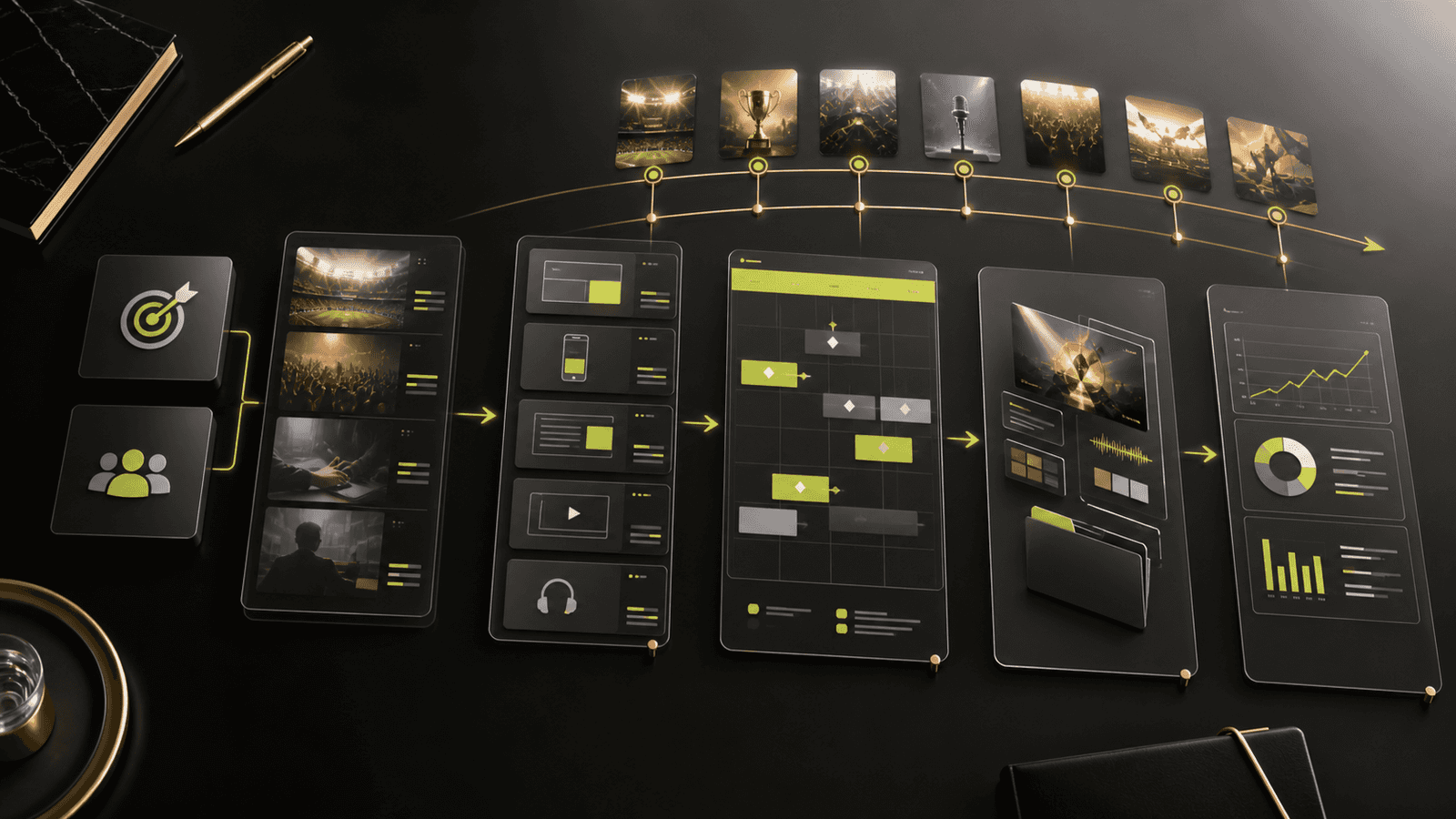
Design the activation around audience moments
Map the campaign before, during, and after the focal event or content moment. Pre-event activity can establish the idea and build recognition. Live or peak activity can deliver the most visible formats and timely interactions. Post-event activity can extend useful content, retarget engaged eligible users where permitted, or move the audience toward a deeper product experience. Not every campaign needs all three phases, but the sequence should be deliberate.
Set exposure roles for each component. A homepage takeover may create scale, a native article may explain the proposition, an interactive unit may demonstrate utility, and a newsletter may reach repeat users. Avoid asking every asset to communicate the full story. A coordinated sequence is easier to understand and measure than several crowded executions competing for attention.
Create for the property, not a generic media plan
Use publisher knowledge early. Review real placement screenshots, safe areas, scroll behavior, refresh rules, sound settings, data availability, and mobile constraints. The strongest sponsorship creative often uses a behavior or context unique to the property. That might be a live-data moment, a recurring content rhythm, or an interaction that feels native to the audience task. Integration should improve relevance without disguising advertising as editorial.
Protect clarity across the package. Use consistent visual cues, one core promise, an accurate call to action, and a landing page that continues the same idea. Build required disclosures and safer-gambling information into the design system. Review every asset at its real size and in its actual surrounding content. A sponsorship is experienced in context, not in a presentation deck.

Create the data and tracking contract
Agree the reporting fields, sources, cadence, timezone, attribution settings, and data owners before launch. Use stable identifiers for publisher, property, placement, format, creative, phase, market, and destination. Test every click path and conversion event on representative devices. Custom components may require bespoke events, so define interactions in plain language and confirm how duplicate or invalid activity is handled.
Separate publisher reporting from operator-side outcomes while creating a reconciliation process between them. Publisher data can establish delivery and on-property engagement. Operator systems should govern approved registrations, verification, first deposits, or other qualified actions. Differences are normal because systems use different rules; unexplained changes in the relationship between them deserve investigation.
Measure the sponsorship as a complete system
Use a ladder that connects delivery, attention, audience response, acquisition, and longer-term value. Delivery measures can include reserved presence, impressions, reach, frequency, and viewability where available. Attention can include interactions, completed views, content engagement, or landing arrivals. Commercial measures should use approved events and an agreed attribution method. Brand measures may include awareness, consideration, search interest, or direct traffic when the design supports a credible comparison.
No single metric captures the whole package. A sponsorship may influence demand without receiving the last click, while a strong click rate can still lead to weak customer quality. Use a pre-agreed primary outcome and guardrails, then interpret the complete pattern. For large investments, consider a holdout, matched-market, exposed-versus-control, or other incrementality design with qualified analytical support.
Govern approvals, safety, and change
Create a responsibility matrix covering commercial approval, creative, content, data, technical integration, localization, legal review, market compliance, and launch authority. Define the final decision maker for each asset and the time allowed for review. Premium packages often fail through coordination rather than strategy; a clear owner and escalation path protect scarce live dates.
Review the full user journey for the exact jurisdiction and campaign period. Confirm eligibility controls, targeting instructions, claims, offer terms, publisher labeling, landing pages, redirects, and required responsible-advertising messages. Record approvals against final files. If the event, offer, copy, destination, or market changes, route the affected components through the appropriate review again.
Use a realistic production timeline
- Six to eight weeks before: confirm objective, publisher fit, scope, commercial terms, measurement design, and major dependencies
- Four to six weeks before: approve the integrated brief, content plan, technical specification, data access, and concept routes
- Two to four weeks before: produce assets, integrate custom units, complete reviews, and prepare tracking and reporting
- Final week: run device QA, validate placements and destinations, rehearse launch ownership, and freeze approved files
- After launch: monitor delivery, document changes, reconcile data, and schedule the final and cohort readouts
Common sponsorship planning mistakes
- Buying prestige without fit: a famous property can still have the wrong geography, moment, format, or eligible audience
- Accepting a bundled total: unitemized media, rights, and production make the premium impossible to understand or negotiate
- Starting creative too late: custom integrations need publisher input, technical time, and multiple approvals
- Using only last click: the measurement model may ignore the association and coordinated exposure the package was designed to create
- Skipping the fallback plan: a moved event, missed deadline, or failed integration can erase value if remedies are not agreed in advance
Are publisher sponsorships always expensive?
They often carry a premium because inventory is scarce, coordinated, or customized, but the sticker price alone does not determine efficiency. Compare the eligible audience, usable delivery, rights, production, exclusivity, and strategic value with realistic alternatives. A focused package can be efficient when it replaces fragmented activity and creates a stronger audience experience. A cheaper package can be poor value if its components do not serve the campaign objective.
How long should a sponsorship run?
The duration should match the audience moment and the time needed to observe the chosen outcome. A single-event takeover may concentrate attention in hours, while a season, content series, or market launch may need repeated exposure across weeks or months. Plan enough time for recognition and learning without committing the entire budget before the publisher, creative, and measurement approach have been tested.
Turn premium context into accountable value
A strong iGaming publisher sponsorship is not simply a large bundle of media. It is a deliberate association between a brand, an eligible audience, a trusted environment, and a timely experience. Its value comes from the coordination of rights, placements, creative, content, and measurement—not from any one line item.
Start with the decision, verify audience fit, itemize the package, price the premium transparently, and build one integrated brief. Then protect the activation with clear ownership, approved creative, tested tracking, and a complete scorecard. That process makes sponsorships easier to compare, safer to launch, and more useful as a repeatable growth channel.
Ready to turn the brief into a live opportunity? Review Impressax's iGaming sponsorship service and bring the audience, market, timing, and commercial questions to the first call.
Sponsorship rights need an activation plan and a consistent way to judge delivery. For the next planning decision, read iGaming sponsorship deal structures: title, embedded, and co-branded. Pair that with Sports publisher vs team sponsorship: choosing the right fit for a casino brand.