
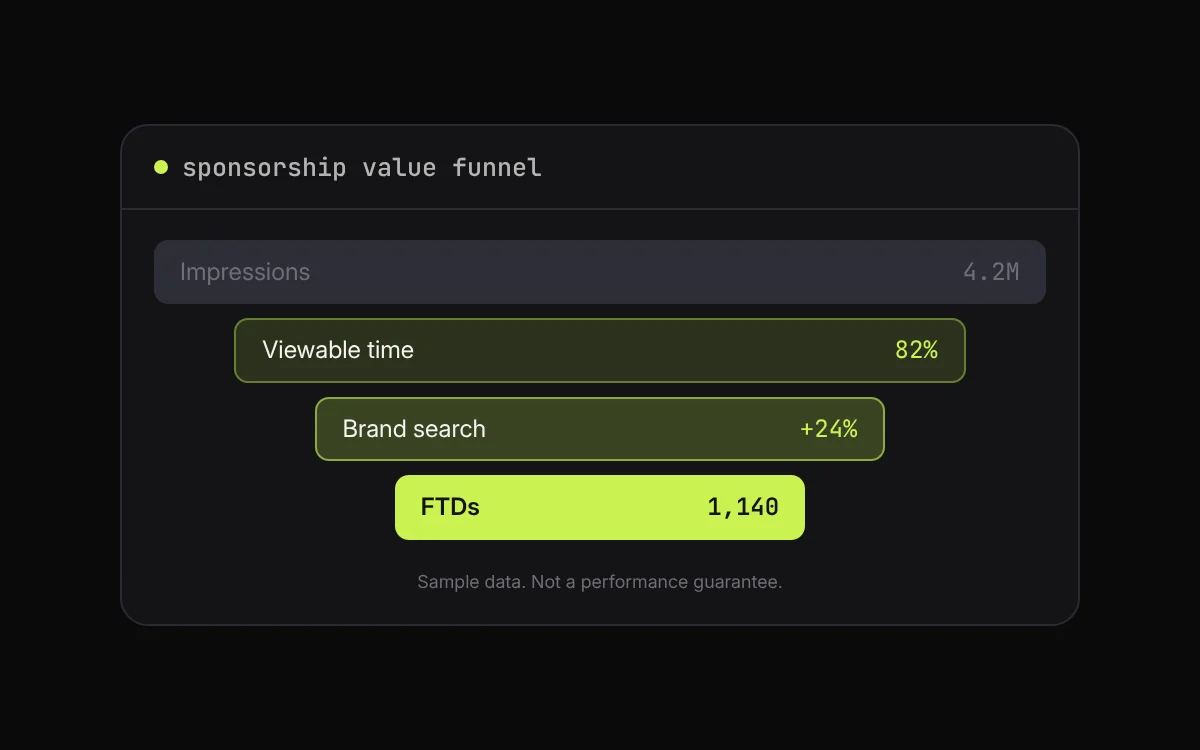
Impressions tell you that a sponsorship asset was served. They do not tell you whether the right audience noticed it, understood the association, considered the operator, or became a valuable customer. Treating delivery as return makes a sponsorship easy to report and hard to improve.
A better plan uses a measurement ladder. Each level answers a different question, and the commercial decision should be agreed before the first dashboard arrives.
First confirm that the rights and media actually ran
Start with the contracted assets: naming, pages, modules, content, video, social support, display inventory, event dates, device coverage, geography, and share of voice. Collect delivery reports and representative evidence. If an asset underdelivered or changed, record the make-good rather than folding it into an undifferentiated total.
For digital inventory, review viewability where it is available, frequency, placement, device mix, and invalid-traffic controls. For embedded products, add usage and repeat behavior. A tool opened by 20,000 eligible fans may matter more than a logo technically served two million times below the fold.
Then measure whether the association landed
Attention and brand response can be studied through interaction, time with the sponsored experience, content completion, branded search, direct traffic, social conversation, surveys, or a publisher-supported brand study. Choose a small set that fits the property instead of collecting every available engagement metric.
The useful comparison is not always before versus after. Sports calendars, promotions, product launches, and competitor activity can move demand at the same time. Where scale allows, use an exposed and control group, matched markets, audience splits, or another design that gives the brand-lift result a credible counterfactual.
Connect attention to qualified acquisition carefully
Trackable links, campaign pages, codes, and product events can show direct response. Preserve market, placement, creative, and time so the team can distinguish a title sponsorship from the supporting media around it. Define registration, verification, first qualified action, and any payable event consistently across channels.
Last-click reporting will often undervalue a sponsorship. People may see the brand repeatedly, search later, and convert through a different route. Use assisted journeys, branded demand, geo or audience tests, and cohort timing to build a fuller picture without pretending attribution can identify every causal exposure.
Judge customer value at the same cohort age
Acquisition volume matters only when it leads to suitable customers. Compare verification, first qualified action, repeat activity, retention, incentive cost, and value indicators at consistent ages such as day 7, day 30, and day 90. A late cohort should not be penalized simply because an earlier channel has had more time to mature.
Include the full economic cost: sponsorship fee, activation, production, media extension, rights management, data, research, travel, hospitality, and internal time. State which benefits are measured and which remain strategic judgments. Precision in the spreadsheet should not hide uncertainty in the assumptions.
Build a scorecard that supports the next negotiation
- Delivery: contracted assets, eligible reach, frequency, viewability, usage, and make-goods
- Response: attention, interaction, brand lift, direct demand, content behavior, and sentiment
- Acquisition: qualified visits, registrations, verified accounts, and agreed conversion events
- Value: cohort quality, retention, contribution, total activation cost, and confidence in causality
Close the campaign with decisions, not a data dump. Identify which assets created value, which rights were underused, which audience controls failed, and what terms should change at renewal. The best sponsorship report makes the next deal easier to buy or easier to decline.
See how Impressax structures publisher partnerships on the iGaming sponsorships page. The broader iGaming advertising KPI framework can help align sponsorship reporting with the rest of the media plan.
Sponsorship rights need an activation plan and a consistent way to judge delivery. For the next planning decision, read iGaming publisher sponsorships: planning premium campaigns.